


Must read on Casein Paint!
 Price: $39.99 |  |  Price: $89.99 | | 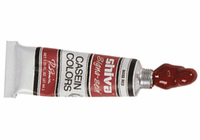 | |  |
|
Casein Paint
"Casein - it's matte, muted and cool, but it's not for the fainthearted.This little-used medium demands care and patience, so let
John Molnar (below) introduce you to its joys."
(Excerpted from International Artist Magazine Issue # 13 June/July 2000)
What is casein?
by John Molnar and Cathy Bennett
When I show my work, the one question I'm invariably asked is "What is casein?" And it's not just from potential buyers, but from critics, gallery owners and fellow artists as well.
So for those of you who may not be familiar with casein, here's a quick overview.
Casein (kay'seen) paint is a aqueous medium made from the protein of milk. You can apply it to any rigid, non-oily surface such as masonite, wood, plaster, heavy watercolour paper, paperboard, canvas or linen mounted on masonite or even stone. Casein dries quickly to a velvety matte finish and over time, it becomes resistant to moisture.
Unlike oils, there are no harmful solvents required for casein, which is particularly appealing to me during Toronto winters when the idea of opening a window to ventilate my studio is both uninviting and impractical. The fact that casein dries more quickly than oil is also a bonus because I don't have to wait several days to go on to the next stage. (I tend to get obsessive about a painting and I want to continue with it while the idea is still fresh in my mind).
I think acrylics are okay, but I don't find them as versatile as casein, especially for the way I paint. With casein I can use a triple zero brush to get razor sharp detail for highlighting water. Or I can lay down a diaphanous wash with a Chinese brush to suggest hills in the distance. Achieving the same results with acrylic would be difficult because they dry too quickly or have a tendency to become gummy and resinous unless you buy all sorts of extenders and other media.
One advantage of casein over watercolour is that it's correctable. If I'm using a gessoed panel and don't like a particular section of the painting, I can rub out casein with a damp cloth or eraser. If it's dried, I remove it with ammonia and water, although this technique is not recommended when working on paper (one part ammonia to nine parts water). In general, casein creates a smooth, flat finish, but I can create an impasto look by texturizing my gesso primer and applying thin layers of casein on top of it.
Besides its amazing versatility, I like the fun of using a forgotten medium. The look is matte, muted and cool!
SUBJECTS FROM MY OWN BACKYARD
When choosing subjects for my paintings, I generally go for what's in "my own backyard" and seldom paint anything that's not within three hours driving distance from Toronto . The motif that seems to run through most of my work is the passage of time - the weathered wood of an old cottage or chair, the ancient rocks of Georgian Bay or transitory clouds moving across a deserted farm.
I work from photo reference and often shooting black and white because I don't want to be overly influenced by colour, which can sometimes make me approach a painting too literally. Generally, I plan out a painting with compositional sketches and then transfer them to masonite, watercolour paper or paperboard.
WORKING WITH CASEIN
I used to do all my casein paintings on Masonite panels, but now I usually paint on canvas or linen, which I affix to Masonite.
I make the panels by sanding down the Masonite and sealing it with a 50-50 mixture of Weldbond PVA glue and water. Then I paste the canvas or linen on the panel and overlap it on the back, making neat folds at the corners. The next day I apply gesso, thin coats of shellac or PVA glue and I usually sand the linen or canvas to a smooth surface because that's what I prefer to paint on. I find the weave in canvas or linen produces a more interesting effect than Masonite and that I can use the warp and weft to create beautiful tonal gradations by simply dragging my brush over the surface.
After Ičve primed my surface, I lay the panel flat and put down the puddles of earth tone colors over my under-drawing and let casein's improvisational qualities do some of the work for me. To encourage the flow of the paints, I keep them "juicy" using liberal amounts of water.
I soon begin to see shadows and textures that improve the composition of the painting, yet don't diverge from my original idea. Fields, trees, hills and structures also begin to form, which means I don't have to render everything exactly as I see it.
After that, I apply two or three glazes of primary or secondary colour over my monochromatic underpaintings to bring out the medium's atmospheric, luminous qualities.
I used to paint in a totally opaque way, but then I'd have to redraw, losing the original feeling of my painting under layers of paint. Now I work primarily with transparent glazes, although I can lighten very dark areas with heavier, more opaquelayers if I need to. The key to glazing is to make sure each layer is dry or the painting will be muddy. If I want to move on quickly, I use a hair dryer to set each layer.
Because casein colours can lighten or darken after they dry, I do a test on a small areaof the painting, adding or subtracting water or paint until I get what I want. Red, oranges and yellows in particular can appear duller because of casein's matte nature, so with these colours, I'll often kick up the intensity a notch by adding powdered pigments to the tubed paint.
If I want to use a colour that isn't available in the Shiva line, I mix Shiva Casein Emulsion with powdered pigments. First, I spray some water on my palette and scoop out the powdered pigment with a palette knife. Then I mix the water and pigments until it forms a paste.
After that I add a couple of drops of Shiva Casein Emulsion, mix again and I'm ready to paint.
Casein's speedy drying time can lead to problems with colour bleeding, but stippling or spattering easily controls tonal gradations.
When I'm happy with the overall result, I begin the finishing stage, which brings "life" into my subjects through fine detail. These details are essential for recreating the sensations of the moment - the mood, feeling and the sound of the scene that initially inspired me to paint it.
In some cases, I add the detail with a finely pointed brush, but I've also been know to scratch or incise details by paring back down to the original surface with an x-acto knife or sandpaper. A stipple brush, toothbrush or my fingers make good tools for adding texture too.
Finally, I ask myself if there's an overall feeling of harmony, with nothing out of step or out of tune. If the answer is yes, I know I'm ready to put down my paintbrush and move onto something else.
GETTING IN SYNC WITH CASEIN
I find that casein is ideal for portraying atmospheric perspective and visual detail. I also like casein because of its improvisational qualities and nuances which I've learned over the years.
But casein is a challenging medium and not for the faint of heart. It demands special considerations and is not easy to master. I'm convinced that working in casein has made me a better painter because I have to consider every stroke before I make it - more than I do with any other media. Casein forces me to slow down and contemplate.
You can call me crazy, but that's exactly why I like it.
To see a casein step-by-step by John Molnar visit:http://www.johnmolnarpaintings.com/pages/stepby.html
What is casein?
by John Molnar and Cathy Bennett
When I show my work, the one question I'm invariably asked is "What is casein?" And it's not just from potential buyers, but from critics, gallery owners and fellow artists as well.
So for those of you who may not be familiar with casein, here's a quick overview.
Casein (kay'seen) paint is a aqueous medium made from the protein of milk. You can apply it to any rigid, non-oily surface such as masonite, wood, plaster, heavy watercolour paper, paperboard, canvas or linen mounted on masonite or even stone. Casein dries quickly to a velvety matte finish and over time, it becomes resistant to moisture.
Unlike oils, there are no harmful solvents required for casein, which is particularly appealing to me during Toronto winters when the idea of opening a window to ventilate my studio is both uninviting and impractical. The fact that casein dries more quickly than oil is also a bonus because I don't have to wait several days to go on to the next stage. (I tend to get obsessive about a painting and I want to continue with it while the idea is still fresh in my mind).
I think acrylics are okay, but I don't find them as versatile as casein, especially for the way I paint. With casein I can use a triple zero brush to get razor sharp detail for highlighting water. Or I can lay down a diaphanous wash with a Chinese brush to suggest hills in the distance. Achieving the same results with acrylic would be difficult because they dry too quickly or have a tendency to become gummy and resinous unless you buy all sorts of extenders and other media.
One advantage of casein over watercolour is that it's correctable. If I'm using a gessoed panel and don't like a particular section of the painting, I can rub out casein with a damp cloth or eraser. If it's dried, I remove it with ammonia and water, although this technique is not recommended when working on paper (one part ammonia to nine parts water). In general, casein creates a smooth, flat finish, but I can create an impasto look by texturizing my gesso primer and applying thin layers of casein on top of it.
Besides its amazing versatility, I like the fun of using a forgotten medium. The look is matte, muted and cool!
SUBJECTS FROM MY OWN BACKYARD
When choosing subjects for my paintings, I generally go for what's in "my own backyard" and seldom paint anything that's not within three hours driving distance from Toronto . The motif that seems to run through most of my work is the passage of time - the weathered wood of an old cottage or chair, the ancient rocks of Georgian Bay or transitory clouds moving across a deserted farm.
I work from photo reference and often shooting black and white because I don't want to be overly influenced by colour, which can sometimes make me approach a painting too literally. Generally, I plan out a painting with compositional sketches and then transfer them to masonite, watercolour paper or paperboard.
WORKING WITH CASEIN
I used to do all my casein paintings on Masonite panels, but now I usually paint on canvas or linen, which I affix to Masonite.
I make the panels by sanding down the Masonite and sealing it with a 50-50 mixture of Weldbond PVA glue and water. Then I paste the canvas or linen on the panel and overlap it on the back, making neat folds at the corners. The next day I apply gesso, thin coats of shellac or PVA glue and I usually sand the linen or canvas to a smooth surface because that's what I prefer to paint on. I find the weave in canvas or linen produces a more interesting effect than Masonite and that I can use the warp and weft to create beautiful tonal gradations by simply dragging my brush over the surface.
After Ičve primed my surface, I lay the panel flat and put down the puddles of earth tone colors over my under-drawing and let casein's improvisational qualities do some of the work for me. To encourage the flow of the paints, I keep them "juicy" using liberal amounts of water.
I soon begin to see shadows and textures that improve the composition of the painting, yet don't diverge from my original idea. Fields, trees, hills and structures also begin to form, which means I don't have to render everything exactly as I see it.
After that, I apply two or three glazes of primary or secondary colour over my monochromatic underpaintings to bring out the medium's atmospheric, luminous qualities.
I used to paint in a totally opaque way, but then I'd have to redraw, losing the original feeling of my painting under layers of paint. Now I work primarily with transparent glazes, although I can lighten very dark areas with heavier, more opaquelayers if I need to. The key to glazing is to make sure each layer is dry or the painting will be muddy. If I want to move on quickly, I use a hair dryer to set each layer.
Because casein colours can lighten or darken after they dry, I do a test on a small areaof the painting, adding or subtracting water or paint until I get what I want. Red, oranges and yellows in particular can appear duller because of casein's matte nature, so with these colours, I'll often kick up the intensity a notch by adding powdered pigments to the tubed paint.
If I want to use a colour that isn't available in the Shiva line, I mix Shiva Casein Emulsion with powdered pigments. First, I spray some water on my palette and scoop out the powdered pigment with a palette knife. Then I mix the water and pigments until it forms a paste.
After that I add a couple of drops of Shiva Casein Emulsion, mix again and I'm ready to paint.
Casein's speedy drying time can lead to problems with colour bleeding, but stippling or spattering easily controls tonal gradations.
When I'm happy with the overall result, I begin the finishing stage, which brings "life" into my subjects through fine detail. These details are essential for recreating the sensations of the moment - the mood, feeling and the sound of the scene that initially inspired me to paint it.
In some cases, I add the detail with a finely pointed brush, but I've also been know to scratch or incise details by paring back down to the original surface with an x-acto knife or sandpaper. A stipple brush, toothbrush or my fingers make good tools for adding texture too.
Finally, I ask myself if there's an overall feeling of harmony, with nothing out of step or out of tune. If the answer is yes, I know I'm ready to put down my paintbrush and move onto something else.
GETTING IN SYNC WITH CASEIN
I find that casein is ideal for portraying atmospheric perspective and visual detail. I also like casein because of its improvisational qualities and nuances which I've learned over the years.
But casein is a challenging medium and not for the faint of heart. It demands special considerations and is not easy to master. I'm convinced that working in casein has made me a better painter because I have to consider every stroke before I make it - more than I do with any other media. Casein forces me to slow down and contemplate.
You can call me crazy, but that's exactly why I like it.
To see a casein step-by-step by John Molnar visit:


Copyright © 2002- Madison Art Shop™ LLC. All Rights Reserved.


